When deciding between a subcompact SUV vs compact SUV, the main considerations are size, performance, and fuel efficiency. Subcompact SUVs offer better maneuverability and fuel economy, perfect for city driving. Compact SUVs provide more space and power, making them suitable for families and long trips. In this article, we will explore the key differences to help you make an informed choice.
Key Takeaways
- Subcompact SUVs are budget-friendly and efficient, ideal for urban drivers needing maneuverability and fuel economy.
- Compact SUVs offer more space and power, making them suitable for families and outdoor enthusiasts requiring versatility.
- Key differences between subcompact and compact SUVs include size, performance, and fuel efficiency, influencing buyer preferences.
Understanding Subcompact SUVs
Subcompact SUVs are the smallest members of the SUV family, crafted for those who value affordability and efficiency. These vehicles are perfect for budget-conscious buyers who need versatility without breaking the bank. Their compact dimensions cater to buyers who don’t require extensive space but still want the elevated driving position of an SUV.
Some popular examples of subcompact SUVs are:
- Hyundai Venue
- Maruti Suzuki Brezza
- Tata Nexon
- KIA Sonet
Known as ‘B-segment SUVs’ or ‘small SUVs’ in some markets, these vehicles offer a cost-effective solution for drivers seeking the benefits of an SUV in a smaller package.
Exploring Compact SUVs
Compact SUVs occupy the middle ground between midsize and subcompact SUVs, providing a blend of size and performance that appeals to a wide range of buyers. These vehicles offer more legroom, larger engines, higher power output, and extra boot space compared to their subcompact counterparts.
One of the key advantages of compact SUVs is their powerful engine options, which deliver better acceleration and handling. Many models also feature a unibody design, contributing to lighter weight, improved fuel efficiency, and a lower center of gravity. This combination of features makes compact SUVs an attractive choice for those who need a versatile vehicle with a bit more muscle.
Popular models in the compact SUV segment include the Ford Escape and Nissan Rogue, both known for their robust performance and advanced technology features. Additionally, compact SUVs often boast aggressive styling that appeals to younger buyers and high safety ratings from organizations like the NHTSA and IIHS.
Key Differences Between Subcompact and Compact SUVs
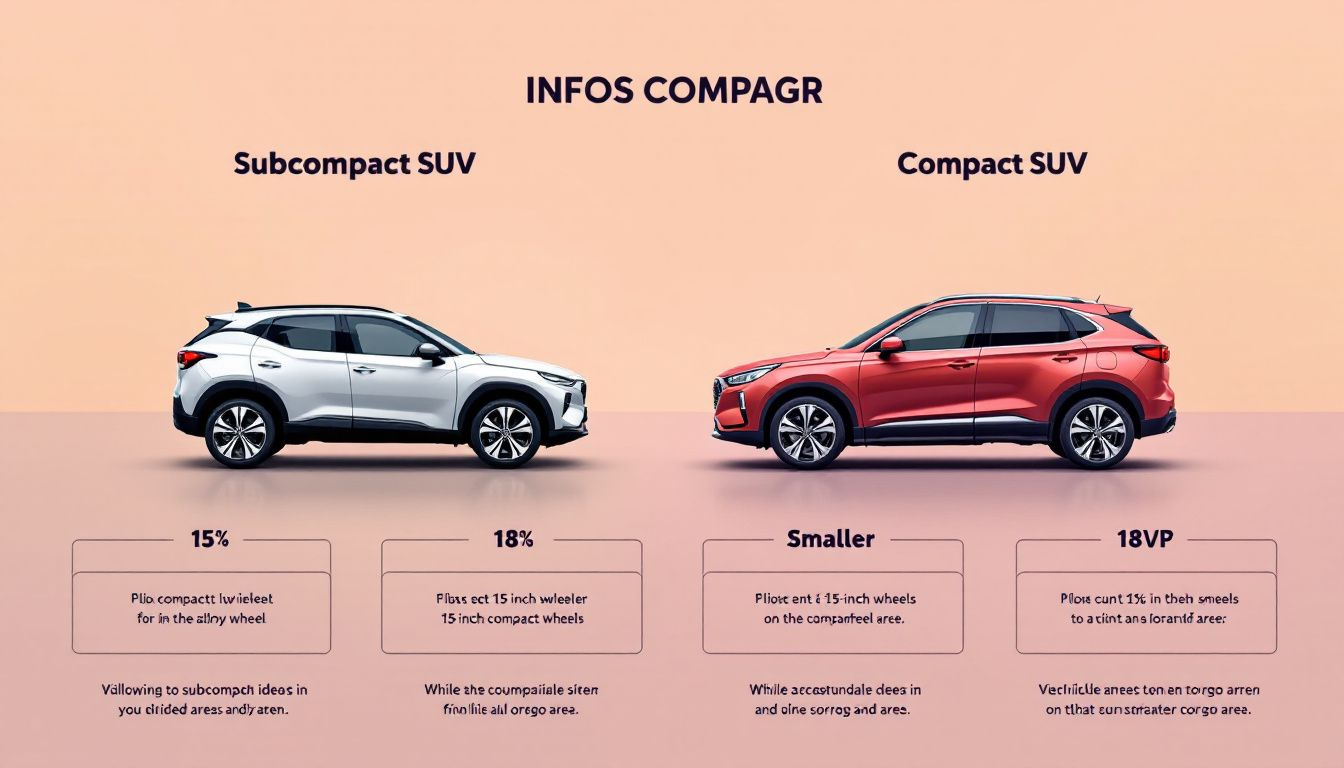
When comparing subcompact and compact SUVs, several key differences stand out, including size, performance, and fuel efficiency. These distinctions can significantly impact your driving experience and vehicle choice.
Here are the details on these differences a few seconds.
Size and Space
The most noticeable difference between subcompact and compact SUVs is their size and space. Subcompact SUVs typically offer less interior room and cargo capacity, making them more suitable for individuals or couples who don’t need extensive storage. Their smaller size also makes them easier to maneuver and park, particularly in crowded urban environments.
Compact SUVs provide more cargo space, accommodating larger loads and offering greater versatility for families or those who frequently transport goods. Their balance of size and utility makes compact SUVs versatile for various driving needs, from daily commutes to weekend adventures.
Performance and Handling
Another difference lies in performance and handling. Subcompact SUVs are generally lighter and smaller, enhancing overall maneuverability and ease of driving in urban settings. This makes them ideal for city driving, where tight corners and limited parking space are common challenges.
Compact SUVs often feature more powerful engines, providing better acceleration and handling in a wider range of driving conditions. While subcompact SUVs excel in urban environments, compact SUVs offer a more robust driving experience, particularly on highways and during long trips.
Fuel Efficiency
Fuel efficiency is a critical factor for many buyers, and subcompact SUVs often have the upper hand. Thanks to their smaller engines and lighter weight, subcompact SUVs typically achieve better gas mileage. This makes them appealing for those who prioritize fuel economy and lower running costs.
Compact SUVs, while generally less fuel-efficient than their subcompact counterparts, still offer respectable gas mileage, especially with newer, more efficient engine designs. The trade-off for better performance and additional space means slightly higher fuel consumption.
Subcompact SUVs provide a compelling choice for drivers seeking enhanced fuel economy in a sub compact suv.
Who Should Choose a Subcompact SUV?

Subcompact SUVs cater to a specific group of buyers. Urban residents often prefer subcompact SUVs for their ease of navigation through crowded streets and limited parking spaces. Younger drivers appreciate their balance of size and functionality, making them perfect for city driving.
Individuals who prioritize fuel efficiency and budget-friendly options may find subcompact SUVs highly attractive. Singles and couples seeking a versatile yet economical vehicle will likely benefit from the practicality of choosing a subcompact SUV over a larger model.
Subcompact SUVs cater to urban drivers, those with tight parking spaces, and anyone seeking better gas mileage.
Who Should Choose a Compact SUV?
Compact SUVs are well-suited for families and individuals who require more space and versatility. These vehicles often come with advanced safety features and spacious interiors, making them appealing to families. People living in suburban areas might prefer compact SUVs for their ability to accommodate larger families and various activities.
Outdoor enthusiasts and those needing extra cargo space will appreciate the practical storage solutions of compact SUVs. Models like the Toyota RAV4, Honda CR-V, and Mazda CX-5 are known for their reliability, fuel economy, and advanced technology, making them ideal for those who value a balance between comfort, performance, and efficiency.
Features and Technology
Modern SUVs come packed with advanced features and technology that enhance the driving experience. Subcompact SUVs, like the Hyundai Kona N, offer top-notch safety ratings and cutting-edge infotainment systems, providing excellent connectivity options. These features make subcompact SUVs a great choice for tech-savvy drivers.
Compact SUVs often take these features a step further with larger infotainment systems and more advanced connectivity options. The emphasis on technology in compact SUVs makes them appealing to those who want a seamless, high-tech driving experience.
Market Trends and Popular Models
The market for subcompact and compact SUVs has seen significant growth, particularly in North America and Europe. This trend contributes to an overall increase in SUV sales, as more buyers are drawn to the versatility and efficiency of these vehicles. The popularity of subcompact SUVs is on the rise, leading to a broader availability of models and features.
Popular models in the subcompact SUV segment include the Hyundai Venue, Maruti Suzuki Brezza, and KIA Sonet, which offer a balance of affordability and functionality.
In the compact SUV segment, models like the Ford Escape, Nissan Rogue, Toyota RAV4, and Honda CR-V continue to dominate due to their reliability, advanced technology, and spacious interiors. As these trends evolve, buyers can expect even more choices and innovations in both segments.
Experience Safe and Secure: What to Look For

When choosing an SUV, prioritizing safety and security is essential. Seek vehicles with high safety ratings from reputable organizations like the NHTSA and IIHS. Effective crash-test performance and a high LATCH system rating for child safety seats provide additional peace of mind.
Selecting a reputable dealership ensures a positive buying experience. Verifying dealership credentials and logos helps avoid scams and ensures a smooth transaction. Thorough research on a dealership’s logo and customer reviews can enhance confidence during the purchase process.
Dealer Logo and Buying Experience
A positive online buying experience begins with verifying dealer logos and ensuring the dealership’s legitimacy. Checking for secure website features and verifying you are human through secure methods helps avoid potential fraud during vehicle research. Adopting best practices, such as researching the dealership and using secure websites, significantly enhances the online buying experience.
When purchasing an SUV, ensuring a secure and smooth online experience is important to keep your website experience safe. Ensuring you are on a legitimate site and secure verifying the dealer’s credentials significantly impacts overall satisfaction with the buying process.
Summary
In summary, choosing between a subcompact and compact SUV depends largely on your specific needs and preferences. Subcompact SUVs are ideal for urban drivers, younger individuals, and those seeking better fuel efficiency and maneuverability. On the other hand, compact SUVs cater to families, outdoor enthusiasts, and anyone needing extra space and advanced features.
By understanding the key differences in size, performance, fuel efficiency, and features, you can make an informed decision that best suits your lifestyle. Whether you choose a subcompact or compact SUV, both offer unique advantages that can enhance your driving experience.
Frequently Asked Questions
What makes a car a compact SUV?
A compact SUV is defined as a small sport utility vehicle that falls between mini SUVs and mid-size SUVs in size. This classification typically offers a balance of space, versatility, and efficiency, making them a popular choice for many drivers.
What is the difference between a compact and a subcompact SUV?
The primary difference between a compact and a subcompact SUV lies in their size and cargo capacity; compact SUVs typically offer 100-109 cubic feet, while subcompact SUVs provide 85-99 cubic feet. Compact SUVs generally offer more storage and comfort, making them suitable for families, whereas subcompact SUVs may be more appealing for individuals or couples focusing on fuel efficiency.
Which type of SUV is better for city driving?
Subcompact SUVs are better for city driving because they offer greater maneuverability and easier parking in crowded areas. Their smaller size makes navigating tight spaces much simpler.
Are compact SUVs more fuel-efficient than subcompact SUVs?
Subcompact SUVs are generally more fuel-efficient than compact SUVs because they have smaller engines and are lighter in weight. Therefore, if fuel efficiency is a priority, subcompact SUVs are the better choice.
What should I look for in terms of safety when choosing an SUV?
Prioritize SUVs with high safety ratings from the NHTSA and IIHS, along with strong crash-test performance and an effective LATCH system for child safety seats. This ensures a safer choice for you and your family.

Written by Jake Ryder
Jake Ryder is the founder and lead reviewer at Road SUV. He has spent more than a decade behind the wheel of everything from subcompact crossovers to full-size 4x4s, logging thousands of highway and off-road miles across the United States. His reviews focus on what actually matters to real drivers: cargo space you can use, safety features that work, and honest talk about fuel economy and pricing.